
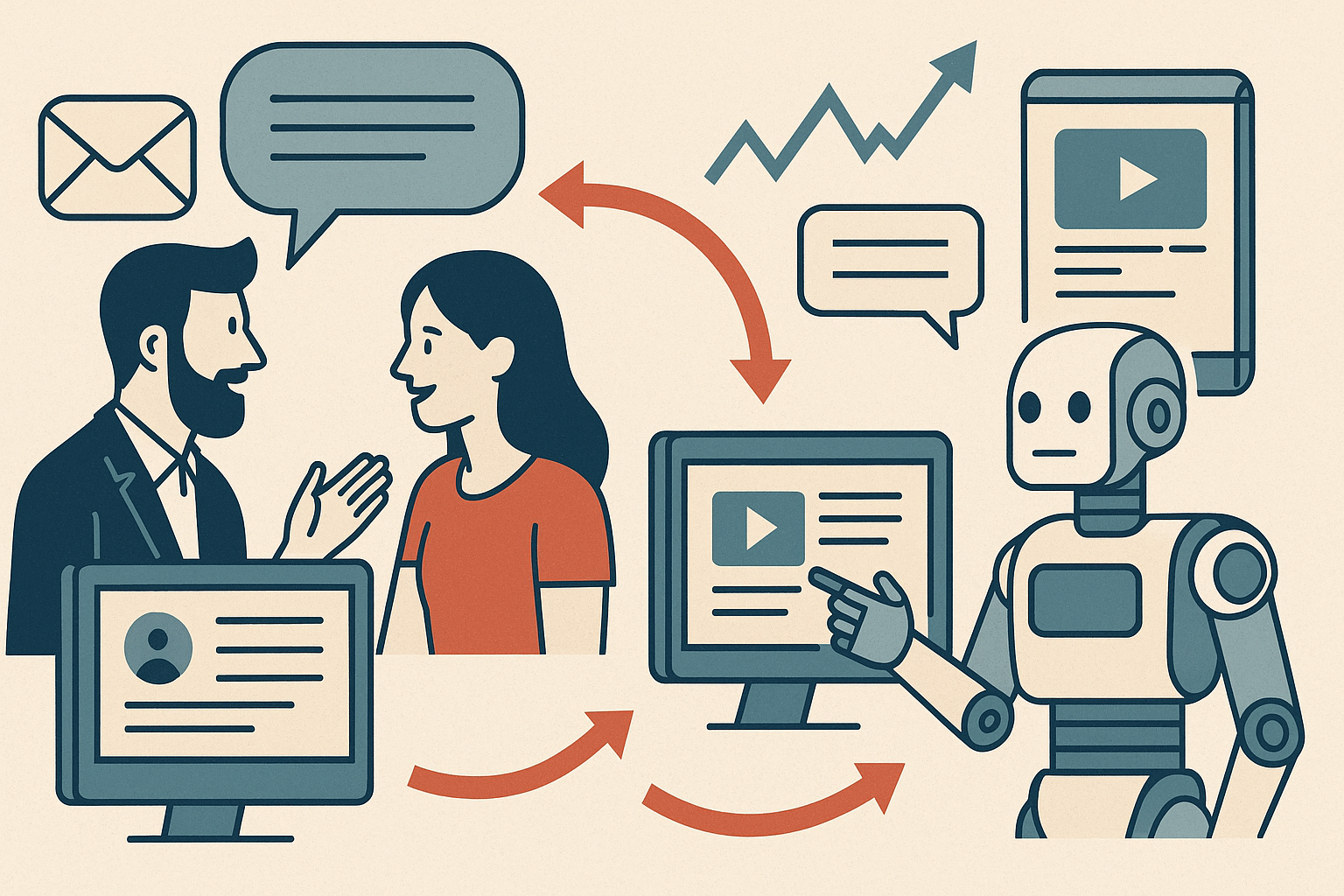
We were promised more customers. What we got was more content—and fewer results.
Welcome to the age of digital noise. Blog posts, AI-written product reviews, YouTube Shorts, TikTok snippets, and faceless comment threads accumulate by the second. But here’s the question serious marketers are starting to ask:
Who is all this content really for?
If you’ve noticed your ads are getting clicks but not conversions—or your videos get views but no comments—you’re not imagining things. Something deeper is broken. And the “Dead Internet Theory” offers one unsettling explanation.
🤖 What Is the Dead Internet Theory—and Why It Should Worry You
The Dead Internet Theory suggests that a significant percentage of online activity today is generated by bots, AI, and engagement farms—not people. While some versions drift into conspiracy territory, the core insight is worth serious attention:
- A 2022 Imperva report found that 42.3% of all internet traffic was bots—and that was before the mainstream adoption of AI agents, ChatGPT-powered tools, and automated content engines.
- Since late 2022, entire workflows—from blog writing to social media engagement to video creation—have been outsourced to AI, resulting in an unprecedented scale of online activity inflated by synthetic content.
- Platforms still reward clicks and engagement, regardless of who—or what—is doing the clicking.
The result? A digital world full of momentum but short on meaning. A place where metrics look good on paper, but real business results are more complex than ever to achieve.
📉 The Real-World Cost of Fake Engagement
If your business depends on honest conversations, real conversions, or relationship-driven growth, the rise of synthetic content isn’t just a tech trend—it’s a financial liability.
Clicks That Don’t Convert
Automated ad platforms like Google Performance Max and Facebook Advantage+ prioritize the most cost-effective engagement. That might mean clicks from bots or users who are bored. You see the “activity” but not the revenue.
Optimization on Garbage Data
When bots fill out lead forms, fake calls trigger conversion pixels, and view farms watch your videos, AI systems “learn” from bad inputs. The result? You spend more time optimizing for less.
Content Without Connection
AI-generated blogs, emails, and social posts can fill a calendar. But they don’t fill your pipeline. In a world oversaturated by automation, real customers are craving proof there’s a person behind the brand.
📊 B2B Social Media Isn’t About Virality—It’s About Trust
If you’re in B2B, your social strategy shouldn’t look anything like a high-volume ecommerce brand. You’re not selling socks. You’re selling credibility, clarity, and long-term trust.
Here’s how social works when it works in B2B:
- Educate customers on what makes you different—your UVPs, your process, your people.
- Build familiarity and rapport before the first sales call.
- Retain clients through ongoing value, not just top-of-funnel noise.
- Show your face—the real person they’ll actually talk to if they reach out.
Want to stand out in this mess?
Pick up the phone. Or better yet, meet in person. Relationship marketing in 2025 doesn’t mean more Zoom calls—it means more presence.
❄️ Outsourcing Your Humanity Isn’t a Strategy
Here’s where most B2B brands fall short: They assign social media to an intern, a contractor, or an outsourced team—then wonder why nothing converts.
Outsourcing social interactions is just AI-lite. You’re still handing off the relationship.
The most effective B2B social strategy is simple: The person they see in your videos should be the one who picks up the phone. Familiarity drives trust. Delegation dilutes it.
If your content builds a relationship, don’t sever that connection at the most critical moment—the first conversation.
🙏 Even the Faith-Based Space Isn’t Immune to the Fakes
Let’s take a quick detour into the Christian influencer world.
A recent study revealed that up to 80% of comments on Christian social media posts are from bots.
Let that sink in.
Who benefits from that kind of artificial engagement? Probably not the audience. And probably not the Gospel.
The most likely beneficiary? The influencer—or the agency running their “growth strategy.” The bots make them appear more favored, more viral, more marketable.
It’s not spiritual warfare. It’s marketing warfare.
And if even Christian influencers are quietly gaming the algorithm with fake interactions, ask yourself: What’s happening behind the scenes in your niche? If you’re paying for “engagement,” are you paying for people—or pixels?
❤️ The Competitive Edge: Marketing Like a Real Person
If you’re not Amazon or Meta, stop trying to act like them. Let the big guys scale mediocrity. You win by showing your humanity.
Here’s what that looks like:
→ Ads That Sound Like People
Talk like someone who knows the space—not like a brochure. “We’ll help you stop wasting money on software your team won’t use” beats “transformative solutions for operational excellence.”
→ Websites That Feel Alive
Use video, stories, team bios, and real customer proof. Remove the sterile layers. Speak directly to your buyer’s concerns.
→ Email That Feels Personal
The best email campaigns feel like letters from a trusted advisor. Not sequences. Not funnels. Conversations.
→ Sales Teams That Drive Relationships, Not Just Metrics
Real sales success doesn’t come from better CRMs—it comes from better follow-through. The right tone. The right timing. The courage to reach out and say, “Hey, thought of you today.”
🔁 Final Word: Don’t Let Bots Drain Your Budget or Your Brand
You don’t need to be everywhere.
You don’t need to out-hack the algorithm.
You need to sound like a person who knows what they’re doing—and actually cares.
In a world full of automation and artificial influence, real wins come from real people, real strategy, and real follow-up.