
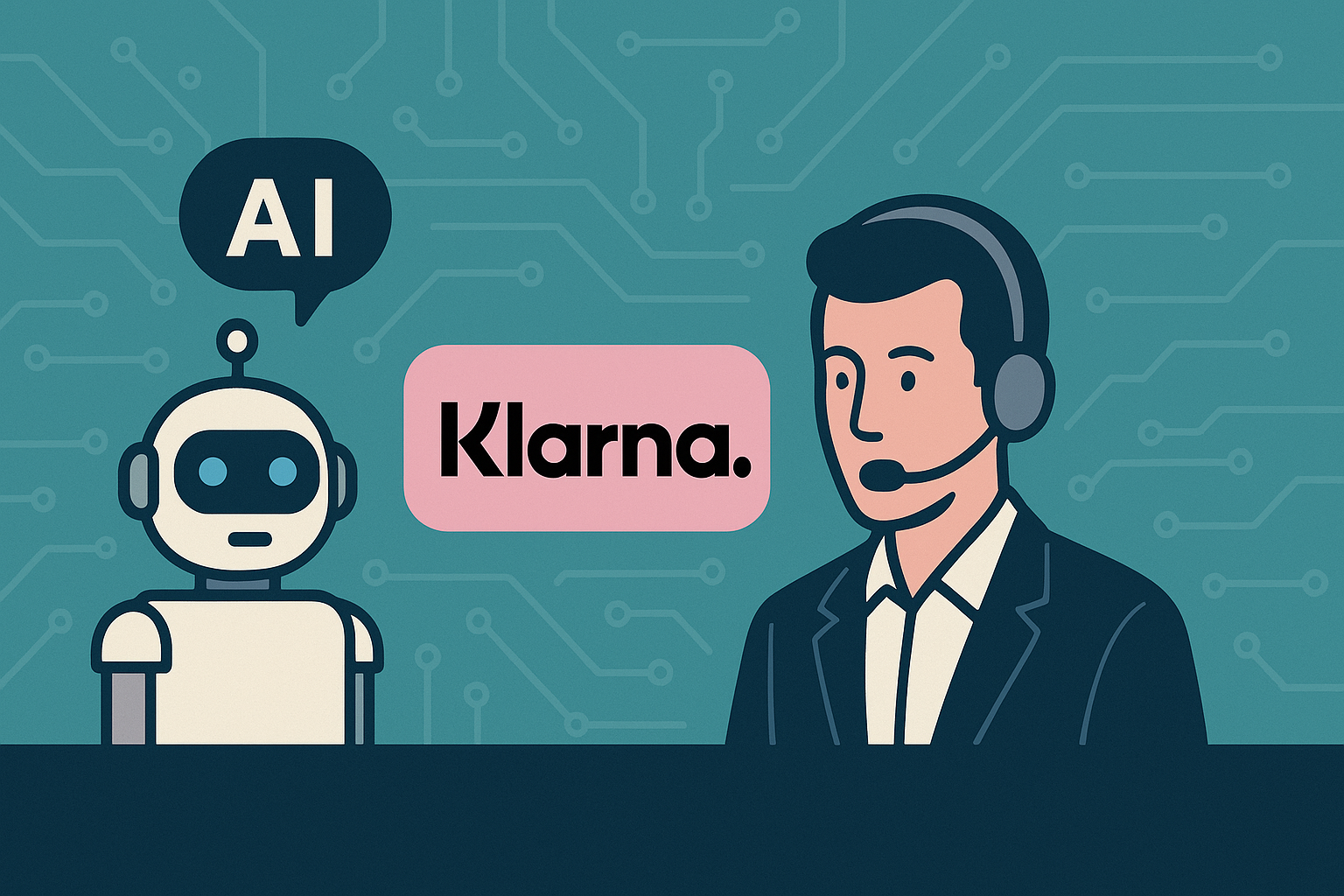
Klarna quietly adds humans back to the support desk after “AI does the work of 700 staff” announcement.
In 2023, Klarna made headlines by replacing much of its customer service workforce with an AI chatbot. They proudly claimed it handled the workload of over 700 agents and reduced customer service costs by millions. But a year later, Klarna has begun rehiring humans.
They deny it’s a “reversal,” instead calling it a “pilot program” to improve quality. But let’s be honest: when a company that doubled down on AI for customer service starts quietly hiring agents again—even remote contract workers—it’s not just a pilot. It’s a course correction.
“We overemphasized cost over quality,” Klarna’s CEO admitted.
What he didn’t say—but what many businesses are learning—is that AI can’t handle the most important part of your business: the relationship.
The Mirage of Full Automation
This story matters because Klarna isn’t just some startup fumbling with chatbots. They’re a multi-billion-dollar fintech that went all-in on AI for customer support—and are now showing signs of retreat. It’s a cautionary tale for any business thinking AI is ready to replace your human frontlines.
AI has its place. It can streamline internal workflows, process data faster than any person, and even assist agents with real-time suggestions. But it’s not a substitute for human interaction—especially not at that critical first touch, where trust, empathy, and judgment matter most.
Here’s what we consistently see:
- AI is great at routine support. It fails at relational service.
- AI can respond instantly. But it often doesn’t listen.
- AI can detect patterns. But it misses nuance.
When AI Becomes a Liability
For businesses with long sales cycles, high-ticket items, or emotionally charged customer journeys (like returns, billing issues, or cancellations), automation often backfires.
Let’s be blunt: if your customer has to hit “0” or type “agent” just to get basic help, your brand is already losing.
That’s not just an inconvenience. It’s a brand decision. A signal that your company values cost-cutting over care.
Klarna learned this the hard way. By eliminating too much of the human experience, they eroded customer trust. And now they’re trying to restore it—not by removing AI, but by balancing it with real people.
Klarna’s Response: Damage Control?
Klarna insists this isn’t a “walk back.” Their official stance is that the AI assistant now handles work equivalent to 800 full-time employees, and that the human hiring is merely a “pilot.” They frame it as an enhancement—not a correction.
But the timing says otherwise.
If the AI system was performing flawlessly, why add humans at all? Why now?
And why shift to contract-based roles targeted at students and rural workers, instead of rebuilding a dedicated customer support team?
The answer is likely simple: people miss people.
The Bigger Lesson for Your Business
This story is less about Klarna and more about the marketing myth that AI can replace real relationships. At some point, every business has to decide: Is the customer an algorithmic output… or a person worth knowing?
Especially in industries with complex products, luxury sales, or B2B contracts—the most profitable customers don’t want AI. They want attention. They want a guide. They want to be heard.
Real retention starts with real conversation.
AI can help. But if you hand off that critical moment—first impression, first problem, first hesitation—to a chatbot, you’re gambling your reputation on a script.
Final Thought: Don’t Chase Trends. Serve People.
Klarna chased efficiency. They got press. But they also got complaints.
Now they’re adding humans back into the mix. Maybe not as a full reversal—but certainly as a reminder: AI doesn’t build loyalty. People do.
So before you automate your customer experience, ask yourself:
- Would you be happy getting that response?
- Would you trust your brand with a chatbot?
- Would you bet a $10K sale—or a lifetime customer—on an AI guess?
If not, don’t force your customers to either.