
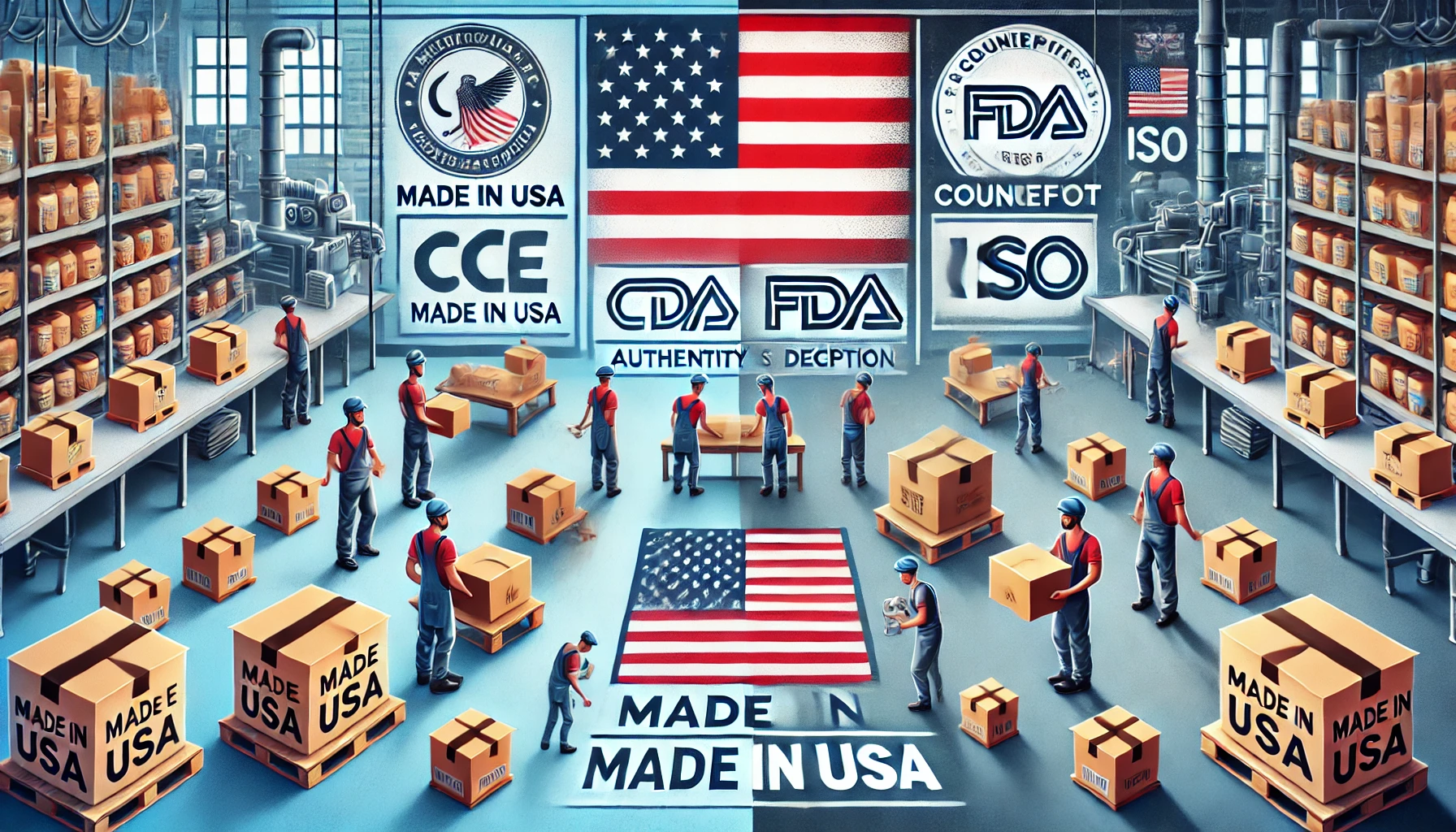
The “Made in USA” label carries significant weight in the marketplace, often influencing consumer purchasing decisions based on perceived quality, patriotism, and trust. However, while some companies legitimately adhere to strict government requirements, others manipulate the label to mislead customers. Understanding these standards is crucial for consumers seeking authenticity and businesses that comply with the rules and want to use them as a marketing advantage.
How Companies Deceive Customers with “Made in USA” Claims
Some businesses exploit the ambiguity in “Made in USA” labeling to deceive consumers. Here are some common tactics:
- Using Qualified Claims Misleadingly – Companies may use phrases like “Assembled in USA with Global Components” to imply a stronger domestic presence than exists.
- Stretching the Definition – Some manufacturers claim “Made in USA” while relying heavily on foreign parts, arguing that the U.S.’s final assembly or minor processing qualifies.
- False or Unsupported Claims – Without stringent enforcement, some companies slap products’ labels without meeting FTC standards, knowing many consumers won’t investigate further.
This deceptive practice misleads buyers and unfairly disadvantages businesses that genuinely manufacture their products domestically.
Government Regulations Defining “Made in USA”
If your company genuinely manufactures in the United States, complying with government standards can help distinguish your brand from competitors using misleading claims. Here are the main regulations governing “Made in USA” labeling:
1. Federal Trade Commission (FTC) Standard (For Consumer Goods)
- The FTC mandates that products labeled “Made in USA” must be “all or virtually all” made in the United States.
- This means all significant parts, processing, and labor must originate in the U.S.
- Minor foreign components may be allowed, but if a substantial portion of materials or labor comes from outside the U.S., the product does not qualify.
2. Buy American Act (BAA) (For Federal Government Procurement)
- Applies to products purchased by federal agencies.
- Requires that at least 55% of the product’s cost comes from U.S.-made components.
- Certain waivers and exceptions exist for industries where domestic sourcing is impractical.
3. Defense Federal Acquisition Regulation Supplement (DFARS) (For Military Contracts)
- The Berry Amendment mandates that specific military products, including textiles, food, and clothing, be 100% made in the U.S.
- Other military contracts often require at least 50% U.S. component costs.
- The Specialty Metals Clause ensures that certain defense-related metals (e.g., titanium, stainless steel) are entirely sourced and processed in the U.S.
4. Infrastructure Investment and Jobs Act (For Public Infrastructure Projects)
- Requires 100% U.S.-made iron, steel, and manufactured goods for federally funded infrastructure projects.
- Some waivers exist, but compliance is generally strict.
How Businesses Can Leverage “Made in USA” Certification
If your company meets the FTC or government procurement standards, you can use this certification to build trust, improve sales, and differentiate from competitors. Here’s how:
- Highlight Your Certification – Display the “Made in USA” label prominently on your website, packaging, and marketing materials.
- Educate Consumers – Explain what “Made in USA” truly means and why it matters.
- Use It as a Competitive Advantage—Emphasize the quality, reliability, and job-creation benefits associated with domestic manufacturing.
- Target Government Contracts – If your business qualifies under BAA or DFARS, you gain access to lucrative federal procurement opportunities.
Beyond “Made in USA”: Other Important Certifications
Government regulations don’t just apply to country-of-origin claims. Many industries require compliance with other certifications that prove quality, safety, or environmental responsibility, including:
- ISO (International Organization for Standardization) – Ensures quality management and operational efficiency.
- CE Marking (European Certification)—This is required for products sold in the European Economic Area and indicates compliance with health, safety, and environmental protection standards.
- FDA (Food and Drug Administration) Approval – Necessary for medical devices, pharmaceuticals, and food products sold in the U.S.
Even for businesses that do not deal directly with the government, these certifications can serve as powerful marketing tools. They prove adherence to high standards, giving companies an edge in both domestic and international markets.
Final Thoughts
“Made in USA” is more than just a label—it’s a powerful trust signal when used correctly. Unfortunately, deceptive marketing tactics have made consumers more skeptical. Companies that meet the requirements can stand out by educating their audience and leveraging compliance as a key selling point.
Understanding government regulations, whether for consumer goods, federal contracts, or industry-specific certifications, isn’t just about following the law—it’s about unlocking business growth, increasing credibility, and staying ahead of the competition.