“Best practices” are often touted as the universal key to e-commerce success. Sleek category pages, minimalist designs, and one-click checkouts are gold standards. But what if I told you that mindlessly applying these principles can actively harm your business—especially when selling complex products with long sales cycles?
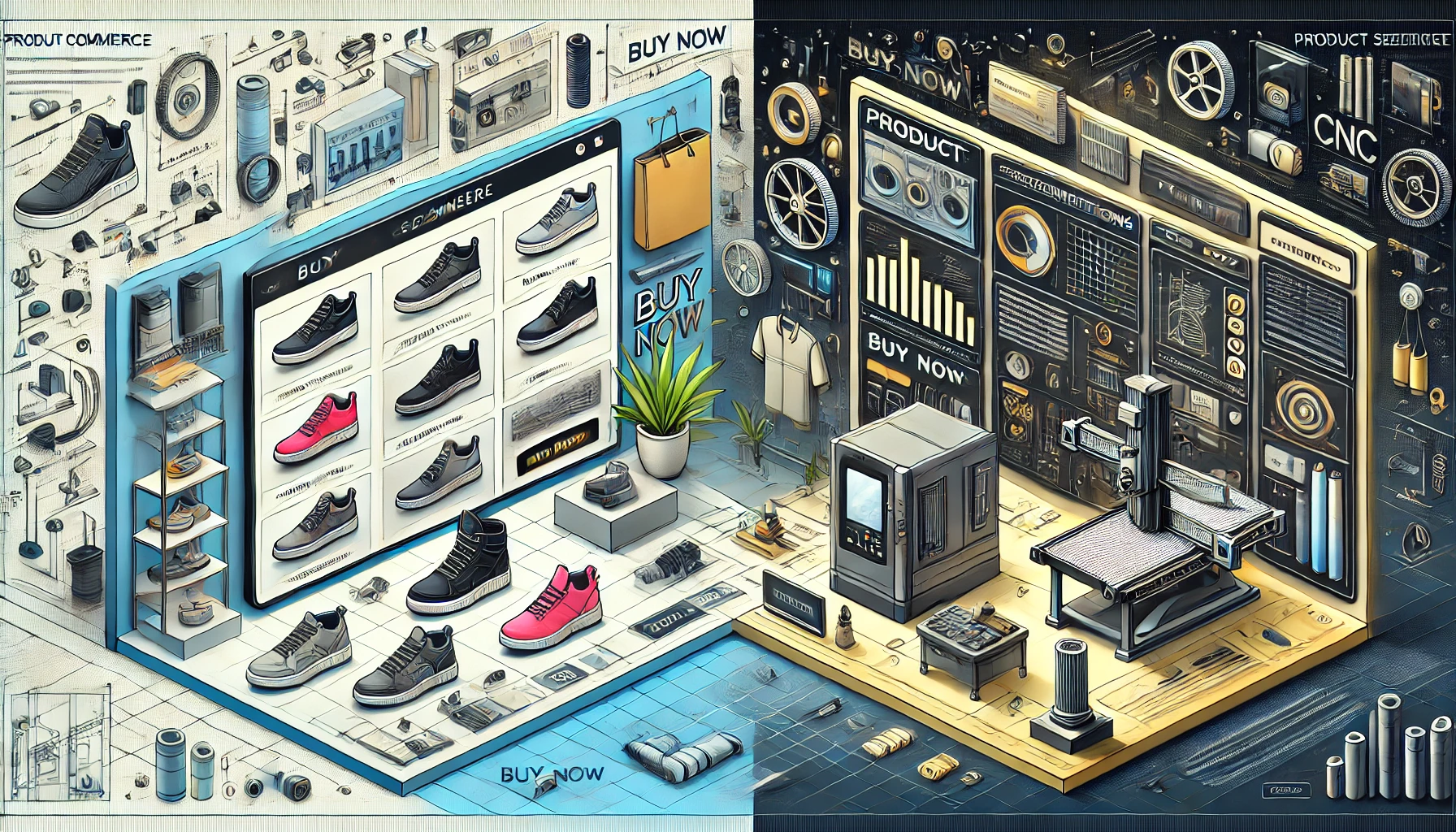
Let’s compare two examples:
- A shoe retailer selling $75 sneakers.
- A manufacturer selling $10,000 CNC machines.
Both operate in e-commerce, but their marketing and sales strategies must diverge dramatically. Applying generic e-commerce practices to both can spell disaster for the latter.
The Complexity Factor: Simple vs. Complex Sales
Simple Sales (Shoes)
The customer journey is typically short for straightforward purchases like shoes. A customer might search for a specific brand or style, scroll through category pages, and decide based on appearance, price, and reviews. Modern e-commerce design—clean pages, limited text, and a seamless checkout—works well because buyers don’t need much information to decide.
Complex Sales (CNC Machines)
For a CNC machine or an industrial laser cutter, the stakes are far higher:
- The price tag often justifies weeks or months of deliberation.
- Customers must evaluate technical specifications, compatibility, support options, and ROI.
- Multiple stakeholders (engineers, procurement teams, and managers) may make purchasing decisions.
In this scenario, buyers don’t just want to know what you sell. They must understand why they should buy from you and, more importantly, why now.
Why “Best Practices” Fail for Long Sales Cycles
Minimalist Pages Don’t Communicate Enough
Modern e-commerce layouts often strip down pages, focusing on aesthetics over substance. For complex products, this approach leads to missed opportunities:
- Anemic Category Pages: You fail to differentiate when every CNC machine or industrial laser cutter is presented with just a product image and price. Customers don’t just want a list—they want to know which model fits their needs and why.
- Shallow Product Pages: Stripped-down product pages with no detailed descriptions, use cases, or specs may lead customers to abandon your site and seek better information elsewhere.
Example:
Imagine shopping for a CNC machine and landing on a page that looks like a shoe retailer’s—just an image, a price, and a “Buy Now” or “RFQ” button. Contrast that with a custom landing page showcasing:
- A detailed product overview.
- Technical specs tailored to industries.
- Case studies showing ROI.
- A video walkthrough of the machine in action.
Which approach builds trust and moves the buyer closer to a decision?
Engagement Metrics: Why “Just a Redesign” Doesn’t Work
A CNC manufacturer recently switched from “dated” WordPress/WooCommerce pages to Shopify’s minimalist layouts and created a disconnect between what buyers were looking for and what’s being offered:
- Engagement Time Down 90%: Customers aren’t finding the depth of information they need, so they leave.
- Traffic Drop: Google interprets shorter engagement times as a sign of low-quality content, which resulted in a 40% decrease in organic traffic.
This underscores that “modern” design trends aren’t always better for complex products.
Best Practices to Avoid for Complex Products
Overemphasis on Site Speed at the Expense of Content
Site speed is critical when competing in a saturated market with thousands of competitors. However, buyers will wait an extra second if the content is valuable for niche products like CNC machines. Balance speed with substance.
Prioritizing Clean Designs Over Information-Rich Pages
Clean designs often mean sparse pages, which might work for shoes but fail for technical products. Your pages should answer every potential buyer’s question before they even contact you.
Neglecting Unique Value Propositions (UVPs)
In complex sales, UVPs must be everywhere. Every page, category, and interaction should communicate why your product is superior. If buyers only compare technical specs, they might as well buy from your competitor.
Strategies for Marketing Complex Products
Always Be Adding Value (Not Just Closing)
You aim to move the buyer closer to a decision with every interaction. Use category and product pages to address common objections, showcase your expertise, and prove your value.
Custom Landing Pages
Replace generic category pages with detailed landing pages for each product line. Include:
- A clear explanation of the product’s purpose.
- Key specifications and features.
- Video demos and customer testimonials.
- Industry-specific use cases.
Focus on Education
Blog posts, whitepapers, and videos can be a goldmine for lead nurturing. Buyers of high-ticket, complex products often spend time researching. Be the authority they turn to.
Leverage Lead Magnets
Offer downloadable resources (e.g., a guide to selecting the proper CNC) in exchange for email addresses. This lets you nurture leads over time with targeted content.
Optimize for Long-Tail Keywords
Instead of generic terms like “CNC machines,” target long-tail keywords like “best CNC machines for aerospace manufacturing.” These buyers are more informed and closer to making a purchase.
The Role of Competition in Best Practices
Speed, simplicity, and design often win in high-volume/high-competition markets (e.g., shoe retailers). However, the competition pool is narrower for specialized industries like CNC or laser cutter manufacturing, and your ability to communicate value becomes the ultimate differentiator.
Final Thoughts
“Best practices” aren’t one-size-fits-all. While they work wonders for simple, impulse-buy products, they can undermine your sales strategy for complex, high-ticket items. Instead of chasing trends, align your site design and content with your customer’s needs.
Returning to detailed, information-rich pages could reverse declining engagement and traffic for businesses like the CNC manufacturer. Emphasizing education, differentiation, and customer-centric design will improve engagement and close more sales.
Remember: Don’t just sell the product. Sell the solution, the expertise, and the trust.